The Hindu Religious Endowments Department
This department was created to coordinate temple administration and to safeguard the cultural and traditional movements of the temples, which have become the historical vaults and connections of our ancestors. The temples in Tamil Nadu are under government administration since the East India Company.
Hindu temples have owned thousands of acres of property and land since the beginning of time. There have been many complaints about the social disorder in India’s administration since the East India Company ruled the country. This was a subject on which the public made many complaints.
Due to this absence, in 1817 a new law, the Madras Endowments and Government Property Regulation Act, was passed. The law was able to check whether endowments, such as the financial aid given to temples, were used correctly and if they were used to serve personal interests. The Board of Revenue was given this power. From that moment on, the government took direct control of thousands of temples.
The East India Company handed over the management of India to the British Government in 1858. It was important for the British government to build trust with the Indians and reduce their hatred towards them. It promised, therefore, that the “British Government would not interfere with religious matters”. As a consequence, the people who already owned temples began to use them and enjoy their property without hindrance.
The British government, despite the high number of complaints received, remained uninvolved with the complicated and hard to understand Indian society and temple matters that were closely interconnected. Despite the public outcry, the handling of gold ornaments and idols was not handled properly. Inside the temples, there is a lot of encroachment on property.
The King of Panagal was appointed Chief Minister in 1920 and attempted to control all temples within the Madras Province. In 1922, he introduced the Hindu Administration Act. He introduced the Hindu Administration Bill in 1925. Then Viceroy Irwin approved the law after he argued with him. In 1927 a group called the Hindu Religious Endowments Board was finally formed. The Board, therefore, was granted the authority to supervise the administration of temples. The Board also had the authority to nominate officers for temples that were not properly administered. In 1940, an officer special was assigned to the Hindu Religious and Charitable Institutions Board in order to reform it.
A committee of retired Madras High Court judges, appointed under the informal chairmanship of the Special Officer in 1942 to recommend that the Hindu Religious and Charitable Institutions Board be converted into government administration. The Hindu Religious and Charitable Institutions Act of 1951 was passed in response. It also included various amendments to the law. Government took control of Hindu Religious and Charitable Institutions. The Tamil Nadu Hindu Religious and Charitable Institutions Act 1959 was amended extensively and came into effect on 22 January 1960. A separate department of the government was set up to oversee Hindu temples.
Temple Darshan :
Many people go on spiritual pilgrimages to see the Lord. People save their money and use it to pay for spiritual journeys and temple darshan. Spiritual journeys can be hindered by certain factors. Many people could not visit temples during the Corona pandemic. Darshan was available online for many people.
A Spiritual Journey:
In this case, devotees are not able to go to temples. A new scheme was launched that allows them to receive prasad via post. In collaboration with the Postal Department, The Hindu Religious and Endowments Department launched a scheme to help temple prasad reach more devotees. This scheme allows devotees to receive temple prasad via post for their birthdays, wedding anniversaries, or other days of their choosing, both in their own name and the names of others.
Temple App Project:
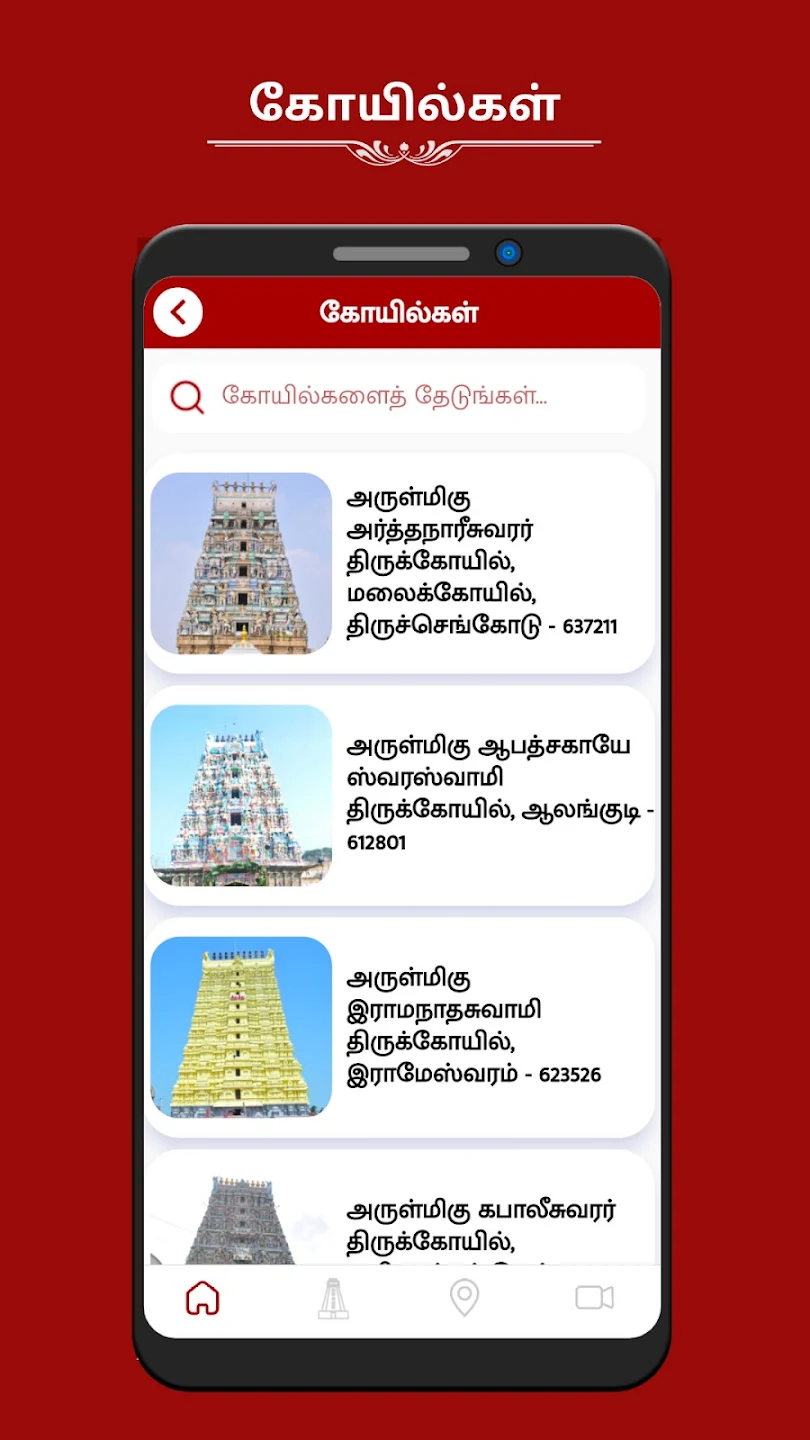
Temples in Tamil Nadu contain a wealth of information about the Tamil culture, traditions, and history. This app was designed to allow everyone access and information about temples using modern technology.
Thala Puranam :
This will allow you to find out the locations of different facilities, such as the Thala Puranam and Thala Varalar. You can also learn the opening hours for the temples. The website includes information on poojas and prayers as well as the fee for them. It also contains important dates, a virtual video that allows you to view the temples in all their angles, a live stream of festivals, Google directions to the temples.
Donation:
The mobile number can be used to inform senior citizens or people with disabilities about the free services they are entitled to, such as electric blankets or wheelchairs. This app can accept donations for all types of donations, including temple services and food donations. Postal Offering Service
Project:
Shekarbabu told reporters that the postal service has begun after this app was launched. Temple offerings from all over India can now be sent to temples. Temple offerings from anywhere in the world can be sent to India within the next 3 months. Now, people in Kashmir can buy Tiruchendur Temple Offerings.
DownloadNow
Offerings to the Temple:
Prasad can be any food that has a special place in whichever temple or town you choose. There will be no additional charge for prasad. In order to stop additional fees being charged for darshan in temples, we are taking measures. Information about irregularities at the Chidambaram Nataraja Temple is being collected. When the time is right, we will act.
Simple darshan:
Supreme Court has itself praised activities by the Hindu Religious and Charitable Trusts Department in regard to the nomination of trustees. The first phase will include the provision of walkways and other facilities in 48 temples on the first level for people with disabilities and elderly. He said that in the next three month, 48 temples on the second level will be converted to make them more accessible to the disabled and elderly.